Why Healthcare Leaders Are Measuring the Wrong Numbers
When an imaging technologist calls out and a shift goes uncovered, most imaging leaders start doing the same math.
How much overtime are we paying? Can someone stay late? Can we find agency coverage?
How many studies are going to be delayed?
Those are important questions, but they don't tell the whole story.
The real cost of an imaging coverage gap has very little to do with what you're paying to fill it. It's everything that happens while that position sits uncovered.
Patient flow slows down. Studies back up. Procedures get delayed. Physicians wait.
Patients leave.
Revenue follows.
That's the cost many hospitals and health systems aren't measuring.
Imaging Doesn't Operate in a Vacuum
Diagnostic imaging is connected to nearly every corner of a healthcare organization.
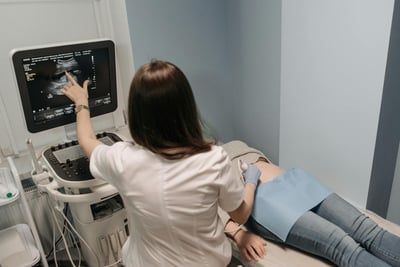
A CT exam supports emergency medicine. An MRI clears a patient for surgery. An ultrasound confirms a diagnosis. An X-ray keeps orthopedic patients moving. Imaging isn't an isolated department. It's infrastructure that keeps patient care moving.
When imaging slows down, the rest of the hospital doesn't keep moving. It slows down too.
That's exactly why Roshal Health approaches imaging coverage differently.
Traditional staffing models treat every coverage gap like a recruiting problem. Roshal treats it like an operational one.
Healthcare organizations don't need another staffing vendor waiting for the next request. They need reliable access to credentialed imaging professionals when demand changes, unexpected callouts happen, or patient volumes surge.
That's why Roshal Health gives hospitals and health systems on-demand access to licensed healthcare professionals across multiple modalities. Instead of reacting to staffing shortages after they happen, organizations can build a more flexible coverage strategy that keeps operations moving without adding unnecessary permanent headcount.
The Most Expensive Cost Doesn't Show Up on a Spreadsheet
The financial impact of an uncovered shift extends well beyond labor costs.
A delayed MRI can push surgeries later in the day. An unavailable sonographer can create scheduling bottlenecks that affect multiple providers. A CT backlog in the emergency department can increase patient length of stay and slow admissions.
Those downstream effects rarely appear on a staffing report, but they directly affect operational performance.
Neither does another hidden cost.
When departments are short, someone always finds a way to make it work. Someone picks up another shift. Someone skips lunch. Someone works another weekend.
Your team steps up because that's what healthcare professionals do.
But eventually, constantly stepping up becomes the expectation instead of the exception.
That's when burnout starts showing up. Then turnover. Then recruiting costs.
Then months spent trying to replace experienced imaging professionals who simply decided they'd had enough.
Every time Roshal provides on-demand imaging coverage, that's one less double shift your internal team has to absorb. One less weekend someone has to sacrifice. One less disruption to the people who keep your department running every day.
Coverage Should Be Elastic, Not Fixed
Healthcare demand isn't fixed. Neither is diagnostic imaging.
Some days your schedule runs exactly as planned. Other days a single callout, an emergency department surge, or increased inpatient volume can change everything before 8:00 a.m.
Yet many organizations still build staffing models around fixed headcount.
That approach often leaves facilities overstaffed when demand falls and scrambling when demand rises.
Roshal Health was built around a different philosophy.
Healthcare facilities don't have to own labor capacity to have access to it.
Through Roshal's talent network, hospitals and health systems can request scheduled coverage for known needs, access on-demand professionals for unexpected gaps, and scale support based on real-time patient demand.
It's a more flexible approach that aligns professional capacity with operational reality.
A Better Conversation for Healthcare Leaders
Most budget conversations begin with labor costs when they should begin with revenue protection.
What happens when imaging delays slow surgeries?
What happens when patients seek care elsewhere because they can't get timely access?
What does another month of mandatory overtime cost in retention?
What does an uncovered shift actually cost when you account for physician productivity, patient throughput, downstream services, and workforce fatigue?
Those are the conversations healthcare leaders are having today.
They're also why more organizations are moving beyond traditional staffing models and investing in coverage strategies designed to support the entire health system, not just fill open shifts.
A Modern Coverage Strategy
Healthcare isn't becoming more predictable.
Patient demand will continue to fluctuate. Coverage gaps will continue to happen. Imaging leaders will continue balancing quality care with workforce challenges and financial pressures.
The organizations best positioned for the future won't necessarily be the ones with the largest staffing budgets.
They'll be the ones with the most resilient coverage strategy.
Roshal Health helps hospitals and health systems maintain operational continuity by providing rapid access to licensed, credentialed imaging professionals across ultrasound, CT, MRI, X-ray, mammography, echocardiography, nuclear medicine, and other diagnostic modalities.
As a tech-enabled talent-sharing platform, Roshal isn't replacing your workforce. We're extending it, giving your organization access to qualified imaging professionals exactly when and where they're needed most.
Because every hour an imaging coverage gap stays open is an hour of patient throughput, revenue, and operational momentum you don't get back.
The goal isn't simply filling shifts.
It's making sure your patients never feel the impact when one goes uncovered.