Managing a multi-modal imaging department has never been more complex. Hospitals and health systems are balancing rising patient demand with ongoing staffing shortages; all while being asked to control costs and maintain high standards of care.
From MRI and CT to ultrasound and X-ray, ensuring consistent imaging tech coverage across modalities is critical to keeping hospital imaging operations running efficiently. But traditional staffing approaches often create more financial strain than flexibility.
Today, healthcare leaders are rethinking how they approach cost-effective radiology staffing. Instead of relying on rigid staffing models, many are adopting a more flexible, technology-driven strategy that aligns staffing resources with real-time demand.
The Cost Challenges of Multi-Modal Imaging Departments
Multi-modal imaging departments require a diverse team of highly specialized technologists. Each modality comes with its own certification requirements, workflows, and scheduling complexities.
This creates several cost pressures:
- Overstaffing to prepare for peak demand
- Overtime expenses for existing staff
- Underutilized technologists during slower periods
- High costs associated with contract labor
- Delays in care due to staffing gaps
When staffing is not aligned with actual patient volume, costs rise quickly and radiology department efficiency suffers.
Traditional hospital staffing solutions often fail to address this problem because they are not designed for dynamic, modality-specific demand.
Why Traditional Staffing Models Fall Short
Many healthcare organizations still rely on staffing agencies or fixed internal schedules to manage imaging departments.
While these approaches can solve some staffing issues, they are not built for flexibility.
Common challenges include:
- Long lead times to secure technologists
- Limited access to multi-modality talent
- Contract minimums that increase costs
- Lack of real-time visibility into staffing needs
When a CT technologist calls out or an unexpected surge in ultrasound demand occurs, traditional staffing models cannot respond quickly enough.
This leads to increased overtime, delayed imaging studies, and missed revenue opportunities.
A Smarter Approach to Cost-Effective Radiology Staffing
To truly reduce costs while maintaining quality, imaging departments need a more agile approach to staffing.
That means moving toward a PRN imaging workforce strategy that allows departments to scale coverage up or down based on real-time needs.
This is where a technology-enabled talent sharing platform like Roshal Health changes the equation.
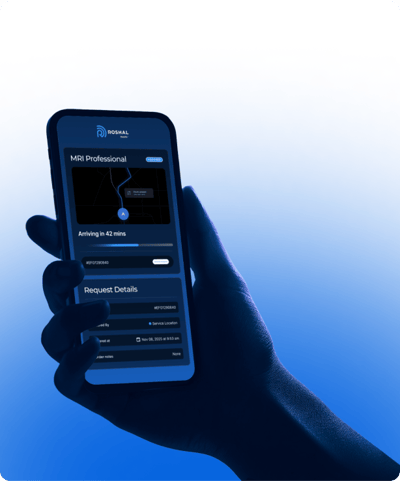
Unlike traditional staffing agencies, Roshal Health does not rely on manual placement or long-term contracts. Instead, it connects healthcare facilities directly with a network of credentialed imaging technologists who are available on-demand and able to arrive at the facility in under 60 minutes.
This allows departments to:
- Fill gaps quickly across modalities
- Avoid unnecessary overtime costs
- Reduce reliance on expensive contract labor
- Maintain consistent imaging throughput
Most importantly, it aligns staffing resources with actual patient demand, which is key to achieving hospital imaging savings.
Optimizing Imaging Tech Coverage Across Modalities
In a multi-modal environment, staffing needs can shift throughout the day.
For example:
- Morning MRI demand may be high
- Afternoon ultrasound volumes may increase
- Emergency CT scans may spike unpredictably
A flexible staffing model allows departments to respond to these fluctuations without overcommitting resources.
With a platform like Roshal Health, imaging leaders can secure technologists for specific modalities exactly when they are needed.
This improves imaging tech coverage while avoiding the cost of overstaffing.
Reducing Overtime and Burnout
One of the biggest hidden costs in imaging departments is overtime.
When internal staff are consistently asked to cover gaps, it leads to:
- Increased labor costs
- Staff fatigue and burnout
- Higher turnover rates
A flexible imaging workforce strategy helps distribute workload more effectively.
Instead of overloading existing staff, departments can bring in additional technologists on demand to maintain coverage.
This not only reduces costs but also supports long-term workforce sustainability.
Supporting Both Large Systems and Community Hospitals
Cost-effective staffing strategies are not one-size-fits-all. Different types of facilities face different challenges.
Large Health Systems
Multi-site health systems often need to balance staffing across multiple locations.
Roshal Health's technology-enabled talent sharing platform allows them to:
- Fill gaps across facilities
- Maintain consistent service levels
- Optimize staffing at scale
Community Hospitals
Smaller hospitals may not have the volume to justify full-time staff for every modality.
Roshal Health's flexible hospital staffing solutions allow them to:
- Access technologists only when needed
- Maintain imaging services without overextending budgets
- Improve patient access to care
Rural Facilities
Rural hospitals often face the greatest staffing challenges.
With limited access to specialized technologists, maintaining consistent imaging services can be difficult.
A platform-based model provides access to a broader network of professionals, supporting reliable imaging tech coverage without requiring permanent hires.
Driving Measurable Hospital Imaging Savings
Cost savings in imaging departments come from better alignment, not just cost-cutting.
A modern staffing strategy helps reduce expenses by:
- Minimizing overtime
- Reducing contract labor costs
- Preventing lost revenue from delayed studies
- Improving patient throughput
By leveraging a tech-enabled talent sharing platform, hospitals can create a more efficient staffing model that supports both financial and operational goals.
This is a more sustainable path to achieving long-term hospital imaging savings.
Roshal Health provides a technology-driven platform that enables real-time access to imaging professionals.
Hospitals are not waiting for placements. They are actively requesting coverage based on immediate needs.
This shift gives healthcare organizations greater control over their staffing strategy while improving efficiency across imaging departments.
The Future of Hospital Staffing Solutions
As imaging demand continues to grow, healthcare organizations must adopt more flexible and scalable staffing models.
An on demand imaging workforce strategy supported by technology offers a clear path forward.
By moving away from outdated staffing approaches and toward a platform-based model, hospitals can:
- Improve radiology department efficiency
- Maintain consistent imaging tech coverage
- Achieve meaningful hospital imaging savings
Most importantly, they can ensure that patient care is never compromised due to staffing challenges.
Building a More Efficient Imaging Department
Cost-effective staffing is not just about reducing expenses. It is about creating a system that works.
With the right strategy in place, multi-modal imaging departments can operate more efficiently, respond to demand in real time, and maintain high-quality care.
If your organization is exploring new hospital staffing solutions, it may be time to consider a different approach.
Connect with our team to learn how Roshal Health supports healthcare organizations through a modern, on-demand talent sharing platform designed to keep imaging operations running seamlessly.